
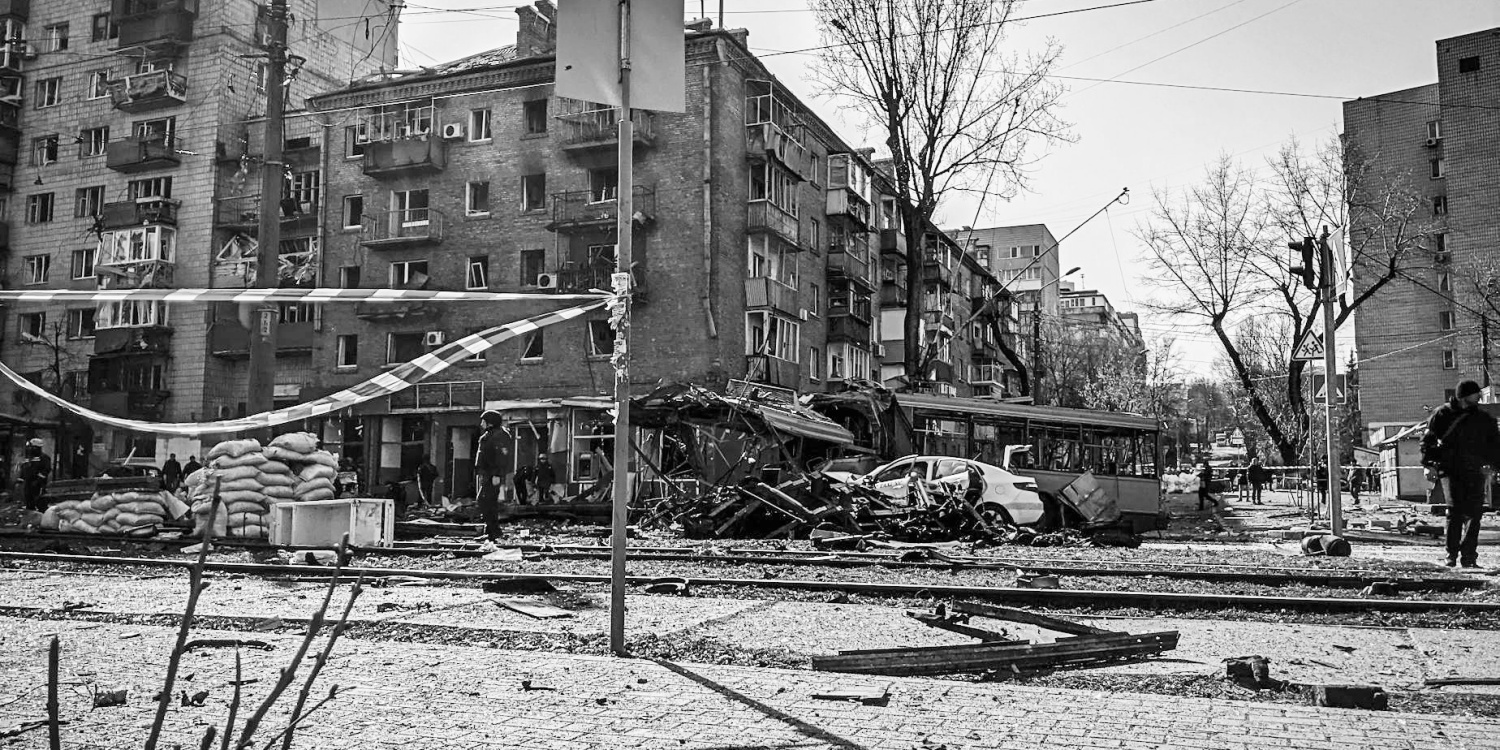
Rebuilding Ukraine may reveal how Europe’s future growth will depend less on subsidies and slogans, and more on capital discipline, productive capacity, and cross-border cooperation.
A new model for Europe is emerging — one that is built not on regulation, rhetoric, or subsidy, but on cooperation through production and capital discipline. It treats the continent as a network of complementary strengths, where engineering, finance, logistics, and local execution form a shared industrial fabric. Ukraine’s reconstruction may become the proving ground for this grand European model, showing how economic interdependence can drive renewal faster than politics ever could.
Europe’s next growth wave may not come from technology clusters or consumer markets. It is more likely to arise from the rebuilding of productive capacity, beginning in Ukraine. The country’s reconstruction is shaping up as a continental experiment in how Europe finances, builds, and reconnects its industrial base. For firms across the continent, it offers both near-term contracts and long-term positioning within a more integrated European economy.
A demand-driven growth engine
While most public programmes begin with policy objectives, Ukraine’s reconstruction is being shaped primarily by real, on-the-ground demand. Energy grids must be rebuilt, housing restored, and logistics networks redesigned. Each task calls for suppliers, engineers, auditors, and financiers from across Europe. The result could be a growth corridor linking investment capital, industrial expertise, and implementation capacity.
For mid-sized firms, the attraction lies in scale and diversity. Scale means there is enough volume and continuity of work to sustain a decade of business across energy, infrastructure, logistics, agriculture, and healthcare. Diversity means the opportunities vary in size and complexity, allowing both small and large firms to participate while spreading risk across sectors. For investors, it is the prospect of returns anchored in tangible assets such as infrastructure, utilities, and productive industry rather than speculative technology valuations.
Capital discipline replaces subsidies
This evolution marks a maturing phase in European finance, combining public backing with a sharper focus on capital discipline. Projects are now structured around bankable principles: milestone payments, collateral, and risk insurance. Development banks such as the EBRD and IFC provide leverage, but private lenders and export-credit agencies continue to set the pace.
Every euro invested is expected to withstand due diligence, compliance checks, and performance auditing. For Europe’s financial sector, this is not charity but rehearsal for a new form of responsible capitalism.
Rebuilding the supply side of Europe
Reconstruction in Ukraine revives something Europe has quietly neglected: its supply side. For two decades, much of the continent’s growth has come from services, finance, and digital platforms. Ukraine’s demand draws attention back to tangible economics — to the production of materials, turbines, rail systems, medical equipment, and secure data networks. It requires skilled labour, precise logistics, and effective industrial coordination, areas where Europe’s mid-tier companies already excel.
The reconstruction could help restore balance between Europe’s digital ambitions and its industrial foundations. It is less about declarations of innovation and more about the ability to execute — through factories, training, and project management.
A private-sector map of integration
The emerging value chains reflect economic logic more than institutional planning. Ports, logistics hubs, and manufacturing sites across Europe will contribute according to their strengths in design, engineering, production, and delivery. This is the essence of a grand Europe: a network of complementary competencies operating under sound economic logic.
Integration increasingly shaped by enterprise performance is not a substitute for cooperation; it is its most credible form.
Managing risk, not avoiding it
Operating in Ukraine remains complex, with fluctuating currencies, lengthy permitting, and security concerns. Yet risk management has become an integral part of the business model. Insurance, escrow arrangements, and joint ventures are no longer protective measures added later, but part of the market entry design. Companies that master this approach gain an advantage not only in Ukraine but in any emerging market.
Learning to price, insure, and execute under imperfect conditions may become one of Europe’s most valuable exportable skills.
A test of European productivity
Ultimately, Ukraine’s reconstruction tests whether Europe can still deliver. It asks whether European firms can coordinate across borders, finance projects efficiently, and maintain quality standards in unpredictable environments. If they can, the result will not only be a rebuilt Ukraine but a revitalised European production system — leaner, faster, and more connected than before.
Conclusion: economics before politics
The long-term outcome may well be deeper economic interdependence. By rebuilding Ukraine, Europe rebuilds its own industrial credibility. And in doing so, it moves closer to the idea of a grand Europe — a continent that grows through the hard, profitable work of reconstruction.
Free subscription on the “Europe Tomorrow” e-news, and receive more articles like this.
Related topics

Steven’s tips for succeeding in Slavic regions
As a young man, our co-founder Steven Storms built his career in Russia and Congo, two business environments where leadership had to be earned every…
More …
Continuing the partnership with the Ukrainian Embassy in Estonia
On 14 October, Jan Lagast visited the Embassy of Ukraine in Tallinn to continue the partnership initiated with Ambassador H.E. Maksym Kononenko and now carried…
More …
Here is the official First Tuesday aftermovie
Real talks, real people, real cross-border connections See the energy, the focus, and the people at the 2 September First Tuesday international business networking event…
More …
Ukrainian Embassy in Estonia to become a partner of the Tallinn First Tuesday
The Embassy of Ukraine in Estonia and the Tallinn city chapter of the ImpactBuilders Foundation have entered into a strategic alliance to strengthen cultural and…
More …
Ukraine: a land of opportunity for European businesses
Ukraine is not just a country facing challenges—it is also a land of resilience and opportunity. While the ongoing conflict continues to impact certain regions,…
More …
Successful ‘First Tuesday’ event illustrates Ukrainian government support for early-movers
The March edition of First Tuesday brought together a dynamic mix of business leaders, entrepreneurs, diplomats, and government officials. Many new names and faces joined…
More …
First Tuesday – where industry meets diplomacy
First Tuesday Tallinn enters its second season this autumn, with a renewed format for one of its most distinctive features: the Diplomatic Focus Room. In…
More …